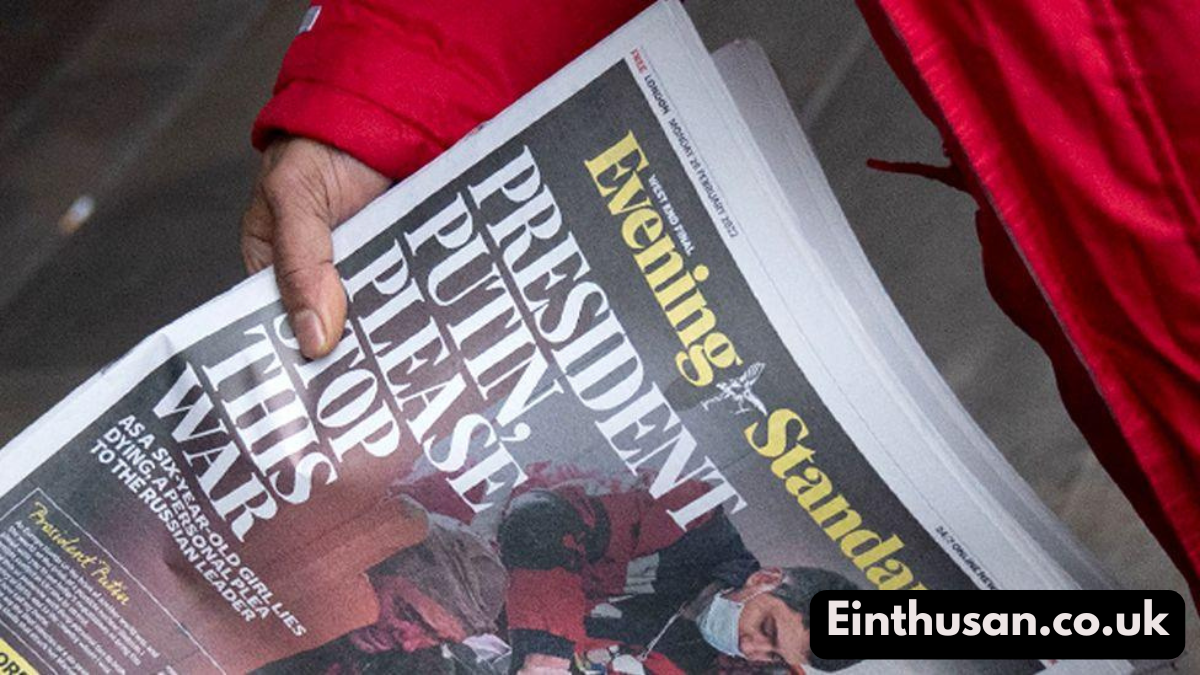
Introduction to the Evening Standard and Its Place in London Media
The Evening Standard has long been a defining presence in London’s media landscape, shaping how millions of readers engage with daily news, culture, and city life. As a free daily newspaper distributed across the capital, it occupies a unique position between traditional journalism and modern urban lifestyle media. Unlike many regional newspapers that have struggled in the digital era, it has managed to remain visible, relevant, and widely discussed, largely because of its deep integration into London’s daily commute culture.
Evening Standard is more than just a news outlet; it is often seen as a reflection of London itself. Its content spans politics, business, entertainment, transport, and human-interest stories, making it a compact but comprehensive snapshot of life in one of the world’s busiest cities. For decades, commuters picking up a copy at train stations or tube stops have treated it as part of their daily routine, often reading it on the way home after work.
What makes the Evening Standard particularly interesting is its ability to adapt while maintaining a recognizable identity. It has transitioned from being a paid evening paper to a free distribution model, and later into a hybrid print-digital publication. Through all these shifts, it has managed to preserve its editorial voice, which tends to balance serious journalism with accessible storytelling. This adaptability is a key reason it remains a relevant force in UK media today.
Another important aspect of the Evening Standard’s role is its influence on London’s cultural conversation. Stories featured in the paper often ripple into broader public discourse, whether they involve political decisions, celebrity news, or urban development. In many ways, it acts as both a reporter and a curator of what matters to Londoners on any given day.
Historical Background and Evolution of the Evening Standard
The origins of the Evening Standard date back to the early 19th century, when newspapers were rapidly evolving as tools of public communication and political influence. Over time, it became one of the most recognizable evening newspapers in the UK, especially in London, where the pace of life demanded timely updates after the workday ended. Its evolution mirrors the broader transformation of print journalism in Britain.
In its early years, the paper focused heavily on political reporting, court news, and international affairs. As the city expanded and industrialized, its content began to shift toward topics that resonated with urban readers, including transport updates, social developments, and local events. This shift helped it grow its readership among working professionals who needed quick, reliable updates before heading home.
A major turning point came when the newspaper transitioned into a free distribution model in 2009. This change fundamentally altered its business structure and audience reach. Instead of relying on paid subscriptions, it focused on advertising revenue and mass circulation. This decision significantly increased its visibility across London, turning it into one of the most widely distributed newspapers in the city almost overnight.
Throughout its history, the Evening Standard has also undergone several changes in ownership and editorial leadership. Each phase brought subtle shifts in tone and strategy, but the core identity of the publication remained intact. It consistently positioned itself as a London-first newspaper, prioritizing stories that directly impact the city and its residents.
Today, its historical legacy is still visible in its editorial approach. While it embraces modern digital journalism, it also retains a sense of traditional reporting values, especially in its coverage of politics and major city developments. This blend of old and new is part of what gives it a distinctive character in the crowded media environment.
Editorial Style and Journalism Approach
The editorial style of the Evening Standard is often described as accessible, urban-focused, and slightly conversational while still maintaining professional journalistic standards. It is designed to appeal to a broad audience, particularly commuters and working professionals who want quick but meaningful news coverage.
One of its defining characteristics is clarity. Articles are typically written in a straightforward manner, avoiding overly technical language unless necessary. This makes the content easy to consume during short reading periods, such as commuting on the London Underground. At the same time, the paper does not shy away from complex topics, including economic policy, political debates, and social issues.
The Evening Standard also places a strong emphasis on breaking news and timely reporting. Its newsroom operates with the pace of a daily cycle that aligns with the rhythm of city life. This means stories are often updated quickly and republished in digital formats to ensure readers receive the most current information available.
Another notable feature of its journalism approach is its focus on human stories. Beyond politics and business, the paper frequently highlights personal experiences, community initiatives, and cultural trends. This adds a layer of emotional connection that helps readers relate to the content on a more personal level.
In addition, the Evening Standard has developed a reputation for strong opinion writing. Editorial columns often reflect on urban life, governance, and social change in London. These pieces are designed to provoke thought and encourage discussion, rather than simply inform. This blend of reporting and commentary gives the publication a distinct voice in the media ecosystem.
Digital Transformation and Modern Media Strategy
Like many traditional newspapers, the Evening Standard faced significant challenges with the rise of digital media. Changing reader habits, declining print advertising, and the rapid growth of online news platforms forced it to rethink its entire strategy. However, rather than resisting change, it embraced digital transformation relatively early compared to some of its competitors.
The newspaper invested heavily in its online platform, creating a website and mobile presence that mirrors the speed and accessibility of its print edition. This allowed it to reach audiences beyond physical distribution points, including international readers who are interested in London news. Over time, its digital version became just as important as its print edition.
Social media also played a crucial role in its evolution. The Evening Standard actively uses platforms like X (formerly Twitter), Instagram, and Facebook to distribute breaking news and engage with readers. This strategy helps it remain visible in a highly competitive digital environment where attention spans are short and content is constantly flowing.
Another key aspect of its digital strategy is multimedia content. The publication has expanded into video reporting, podcasts, and interactive features. These formats allow it to present stories in more engaging ways, catering to different audience preferences. For example, a political story might be accompanied by a short video explainer or an infographic.
Despite these innovations, the transition has not been without challenges. Monetizing digital content in a free-access model is difficult, and the Evening Standard has had to rely heavily on advertising partnerships and sponsored content. Balancing commercial needs with editorial integrity remains an ongoing task in its digital journey.
Cultural Influence and Role in London Society
The Evening Standard has long been more than just a news provider; it is also a cultural institution in London. Its influence extends into fashion, entertainment, arts, and public discourse, shaping how the city sees itself and how it is perceived globally.
One of its most notable contributions to culture is its coverage of theatre, film, and the arts. London is one of the world’s major cultural capitals, and the Evening Standard plays a key role in highlighting performances, exhibitions, and creative developments. Its reviews and features often help shape public interest in cultural events.
The newspaper is also known for its annual awards and recognition programs, which celebrate achievements in theatre, film, and other creative industries. These events reinforce its role as a cultural authority and help maintain strong relationships with the entertainment sector.
In addition to arts coverage, the Evening Standard frequently addresses social issues affecting Londoners. Topics such as housing, transportation, inequality, and public services are regularly explored. By doing so, it contributes to ongoing conversations about how the city is governed and how it is evolving.
Its influence also extends to lifestyle trends. From restaurant openings to fashion insights, the publication often highlights what is new and noteworthy in London. This makes it a reference point for both residents and visitors looking to understand the city’s dynamic lifestyle.
Business Model and Financial Structure
The business model of the Evening Standard is quite different from traditional subscription-based newspapers. Since becoming a free publication, it has relied heavily on advertising revenue, partnerships, and sponsored content. This shift fundamentally changed how it operates and how it sustains itself financially.
Advertising remains the core source of income. The newspaper’s wide circulation in central London makes it an attractive platform for advertisers targeting commuters and professionals. This includes luxury brands, entertainment companies, and service providers who want visibility in a high-value market.
However, the reliance on advertising also introduces challenges, especially during economic downturns when marketing budgets shrink. To mitigate this, the Evening Standard has diversified its revenue streams by expanding into digital advertising and branded content collaborations.
The publication has also experimented with events, sponsorships, and partnerships to strengthen its financial position. These initiatives allow it to leverage its brand beyond traditional journalism and create additional value for advertisers and audiences alike.
Despite these efforts, the broader print media industry continues to face structural challenges. Declining print readership and increased competition from digital-native platforms mean the Evening Standard must constantly adapt its business model to remain sustainable.
Competition and Position in the Media Landscape
The Evening Standard operates in a highly competitive media environment, particularly in London, where numerous newspapers, broadcasters, and digital platforms vie for attention. Despite this, it has managed to maintain a distinct identity.
Its closest competitors include national newspapers with strong London coverage, as well as digital-first media outlets that focus on breaking news and lifestyle content. However, its free distribution model gives it a unique advantage in terms of accessibility and reach.
What sets it apart is its hyper-local focus combined with national relevance. While many newspapers cover London as part of a broader national agenda, the Evening Standard places the city at the center of its editorial strategy. This gives it a specialized niche that is difficult to replicate.
Additionally, its strong brand recognition plays a significant role in maintaining its position. For many Londoners, it remains a familiar and trusted source of daily information, even in an era of fragmented media consumption.
Future Outlook and Continued Relevance
Looking ahead, the Evening Standard faces both opportunities and challenges. The media landscape continues to evolve rapidly, with digital platforms reshaping how news is consumed. To remain relevant, the newspaper must continue innovating while staying true to its core identity.
One potential area of growth is deeper digital integration. As audiences increasingly shift to mobile and on-demand content, the Evening Standard has the opportunity to expand its multimedia offerings and personalized news experiences.
Another important factor is audience engagement. Building stronger relationships with readers through interactive content, events, and community-driven journalism could help reinforce loyalty in a competitive market.
At the same time, maintaining financial stability will remain a key challenge. The reliance on advertising requires constant adaptation to market conditions and advertiser expectations. Exploring new revenue models may become increasingly important in the future.
Despite these challenges, the Evening Standard’s strong brand, cultural influence, and deep connection to London give it a solid foundation. Its ability to evolve while preserving its identity will likely determine its long-term success.
FAQs
What is the Evening Standard known for?
It is known for providing daily London-focused news, culture, politics, and entertainment coverage.
Is the Evening Standard a free newspaper?
Yes, it is distributed for free across London, mainly in commuter-heavy areas.
Who owns the Evening Standard?
It is owned by a private media group with a focus on London-based publishing.
What type of news does the Evening Standard cover?
It covers politics, business, lifestyle, transport, entertainment, and cultural stories.
Is the Evening Standard available online?
Yes, it has a digital platform offering news articles, multimedia content, and updates.
Also read: Chloe Kelly: The Rise, Career, and Impact of an England Football Star
About the Author