What is Questbe?
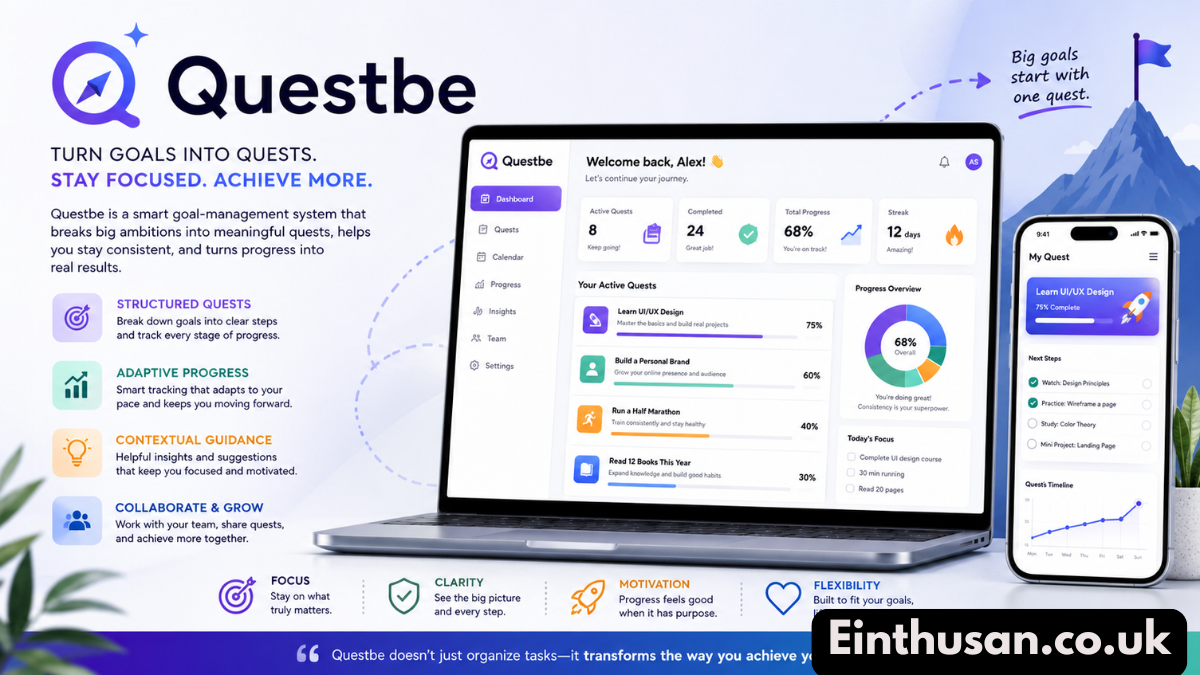
Questbe is best understood as a modern digital concept built around structured goal discovery, guided progress, and intelligent task exploration. At its core, it represents a system where users can define what they want to achieve and then break it down into manageable “quests” that feel more engaging than traditional task lists. Instead of treating productivity as a rigid checklist, Questbe introduces a more adaptive and exploratory approach that blends planning with motivation.
One of the defining ideas behind Questbe is that it doesn’t just organize tasks—it reshapes how people think about them. Each objective is treated like a small journey rather than a static item. This makes it particularly appealing for individuals who struggle with conventional productivity tools. By adding structure without making things feel restrictive, Questbe creates a balance between discipline and creativity.
Another important aspect of Questbe is its flexibility. It can be used for personal development, learning new skills, managing projects, or even tracking long-term ambitions. The system is designed in such a way that it adapts to different lifestyles rather than forcing users into a single method. This adaptability is one of the reasons it is gaining attention in productivity and digital organization discussions.
Origin and Concept Behind Questbe
The idea behind Questbe originates from the growing need for more human-centered productivity systems. Traditional task managers often focus heavily on efficiency, but they tend to ignore motivation, emotional engagement, and long-term consistency. Questbe emerged as a response to this gap, aiming to make goal management feel more interactive and less mechanical.
At a conceptual level, Questbe draws inspiration from gamification principles. However, it does not rely purely on game mechanics like points or badges. Instead, it subtly integrates progression-based thinking, where each completed step contributes to a larger sense of achievement. This approach allows users to feel a natural sense of momentum without feeling pressured by artificial reward systems.
The philosophy behind Questbe also emphasizes clarity of intent. Rather than overwhelming users with endless lists, it encourages them to define meaningful “quests” that reflect actual priorities. This helps reduce cognitive overload and promotes more intentional decision-making. In a world where digital distractions are constant, this clarity becomes a valuable asset for maintaining focus and direction.
Core Features of Questbe
Questbe is built around several core features that distinguish it from conventional productivity tools. One of the most important features is its quest structuring system. Instead of simple to-do items, tasks are grouped into layered objectives that represent broader goals. This hierarchy allows users to see both the big picture and the small steps needed to get there.
Another key feature is adaptive progression tracking. Questbe does not force rigid timelines in most cases; instead, it adjusts progress visibility based on user activity. This creates a more forgiving and realistic experience, especially for people working on long-term goals. It also helps reduce burnout by avoiding overly strict deadlines that may not fit real-life fluctuations.
A third major feature is contextual guidance. Questbe often provides subtle prompts or suggestions based on user behavior. These insights are not intrusive but are designed to help users stay aligned with their objectives. This creates a semi-intelligent system that supports decision-making without taking control away from the user.
How Questbe Works in Practice
In practical use, Questbe begins with the user defining a central goal or theme. This could be anything from learning a new language to building a business or improving fitness. Once the main goal is established, the system helps break it down into smaller quests that feel more achievable and less overwhelming.
Each quest typically includes multiple stages, allowing users to progress gradually. Instead of focusing on completing everything at once, the system encourages steady advancement. This incremental structure makes it easier for users to maintain consistency, even when motivation fluctuates. It also helps transform large ambitions into manageable daily or weekly actions.
As users interact with the system, Questbe tracks their progress and adjusts recommendations accordingly. For example, if a user consistently completes certain types of tasks faster, the system may suggest increasing difficulty or expanding scope. This dynamic adjustment ensures that the experience remains engaging over time rather than becoming repetitive.
Use Cases of Questbe
Questbe can be applied in a wide range of real-world scenarios, making it a versatile tool for both personal and professional use. In personal development, it can be used to build habits such as reading, exercising, or learning new skills. By turning these habits into structured quests, users are more likely to stay consistent over time.
In professional environments, Questbe can help manage complex projects by breaking them into smaller deliverables. Teams can use it to assign responsibilities, track progress, and maintain alignment without overwhelming team members with excessive detail. This makes it particularly useful in collaborative and remote work settings where clarity is essential.
Educational use is another strong application area. Students can use Questbe to structure study plans, prepare for exams, or manage long-term academic projects. By turning learning into a quest-like experience, it becomes easier to stay motivated and engaged, especially during challenging subjects or extended study periods.
Benefits of Using Questbe

One of the biggest benefits of Questbe is improved motivation. By reframing tasks as quests, users tend to feel more engaged and less burdened. This psychological shift can significantly improve consistency, especially for long-term goals that typically suffer from drop-off.
Another major benefit is clarity. Questbe helps users clearly understand what needs to be done and why it matters. Instead of scattered tasks, everything is organized into meaningful structures. This reduces confusion and helps users prioritize more effectively, leading to better decision-making overall.
A third benefit is adaptability. Unlike rigid systems, Questbe adjusts to the user’s pace and working style. This makes it suitable for a wide variety of individuals, including students, professionals, freelancers, and even teams. The flexibility ensures that it remains useful even as goals and circumstances change over time.
Challenges and Limitations of Questbe
Despite its advantages, Questbe is not without challenges. One of the primary limitations is that it may require an initial learning curve. Users who are accustomed to traditional to-do lists might find the quest-based structure slightly unfamiliar at first. It takes time to fully understand how to design effective quests.
Another challenge is potential over-structuring. While Questbe is designed to simplify planning, some users may end up creating overly detailed quest systems that become complex to manage. This can defeat the purpose of reducing cognitive load and may require careful balancing to avoid unnecessary complexity.
Additionally, Questbe relies heavily on user consistency. While it supports motivation, it cannot replace personal discipline. Users who do not actively engage with the system may not experience its full benefits. Like any productivity framework, its effectiveness ultimately depends on how it is used.
Comparison with Other Productivity Systems
When compared to traditional task management tools, Questbe stands out due to its narrative-driven structure. Most productivity apps focus on lists, deadlines, and reminders, while Questbe emphasizes progression and experience. This makes it feel less like administrative work and more like guided achievement.
Compared to habit-tracking systems, Questbe offers more depth. Habit trackers are excellent for repetition, but they often lack context. Questbe, on the other hand, connects habits to larger goals, giving users a clearer sense of purpose behind their actions. This connection can significantly improve long-term engagement.
When placed alongside gamified productivity apps, Questbe takes a more subtle approach. Instead of relying heavily on game mechanics, it focuses on natural motivation and structured exploration. This makes it feel more organic and less artificial, which may appeal to users who prefer minimalistic yet meaningful systems.
Future of Questbe
The future of Questbe looks promising as productivity tools continue to evolve toward more personalized and intelligent systems. One likely direction is deeper integration with AI-driven insights that can help users refine their quests more effectively based on behavior patterns and performance trends.
Another possible development is increased collaboration features. As remote work becomes more common, systems like Questbe may expand to support team-based quests, where multiple users contribute to shared objectives in a more structured and transparent way.
There is also potential for cross-platform integration. Future versions of Questbe could potentially connect with calendars, learning platforms, and project management tools to create a unified productivity ecosystem. This would make it even more powerful and convenient for users managing multiple aspects of their lives.
Tips for Getting the Best Out of Questbe
To get the most out of Questbe, it is important to start simple. Many users make the mistake of creating overly complex structures from the beginning. Instead, starting with a single goal and gradually expanding is a more effective approach that helps build familiarity with the system.
Another useful tip is to focus on clarity rather than quantity. Instead of creating too many quests, it is better to define a smaller number of meaningful ones. This keeps the system manageable and ensures that attention is directed toward what truly matters.
Finally, consistency is key. Questbe works best when it is used regularly and updated frequently. Even small daily interactions can make a significant difference over time. Treating it as a living system rather than a static planner helps maximize its long-term value.
FAQs
What is Questbe used for?
Questbe is used for organizing goals into structured, step-by-step quests that improve focus and motivation.
Is Questbe suitable for beginners?
Yes, it is beginner-friendly, though it may take some time to get used to its quest-based structure.
Can Questbe be used for team projects?
Yes, it can be adapted for collaborative work and shared goal tracking.
Does Questbe replace traditional task managers?
Not necessarily; it complements them by offering a more goal-oriented approach.
Is Questbe only for productivity?
No, it can also be used for learning, personal growth, and habit building.
Also read: Bella Hadid Street Style: A Deep Dive Into Her Effortlessly Iconic Fashion Identity
About the Author