Introduction to “HY meaning in text”
In today’s digital communication world, short forms and abbreviations have become a natural part of how people interact. One of these commonly used expressions is “HY,” which often appears in chats, social media messages, and even casual online conversations. At first glance, it may look confusing to someone who is not familiar with texting slang, but in reality, it is quite simple and widely used. Understanding “hy meaning in text” is important because it helps decode the tone and intention behind a message, especially in fast-paced digital conversations where every second counts.
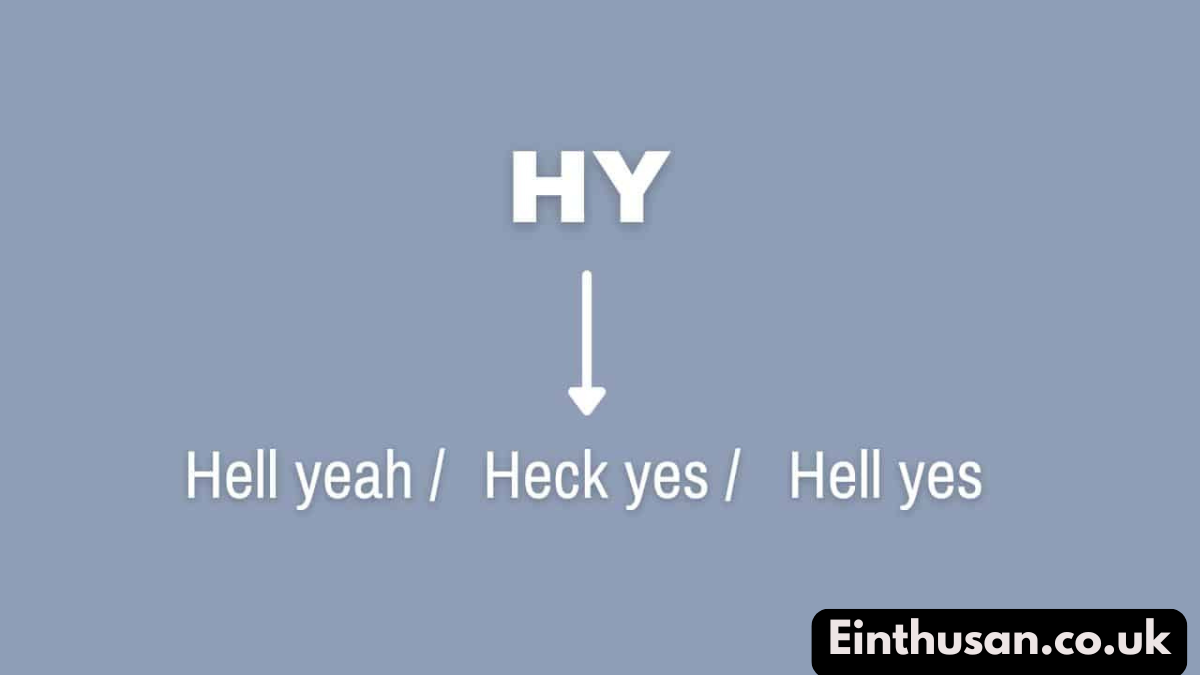
“HY” is generally considered a shorthand version of “Hi” or “Hey,” used to greet someone quickly and casually. It is often typed when someone wants to start a conversation without putting in too much effort or formality. Unlike traditional greetings, which may feel more structured or polite, “HY” carries a relaxed and friendly vibe. It is commonly used among friends, classmates, and people who are already familiar with each other, making it more of an informal digital greeting than a formal one.
In modern communication, especially on messaging apps and social media platforms, brevity is key. People prefer quick responses and easy expressions, and “HY” fits perfectly into that pattern. It saves time, reduces typing effort, and still manages to convey a friendly intention. However, its simplicity can sometimes lead to confusion, especially for people who are not deeply familiar with texting culture. That is why exploring the meaning and usage of “HY” is essential for better digital communication understanding.
Core Meaning and Interpretation of HY
At its core, “HY” is simply a shortened form of “Hi” or “Hey,” and it functions as a greeting in text-based communication. It does not carry any complex meaning beyond initiating a conversation or grabbing someone’s attention. However, its interpretation can slightly vary depending on the context in which it is used. In most cases, it is casual and friendly, but tone can shift based on the relationship between the sender and receiver.
The simplicity of “HY” is what makes it so widely used. People often prefer it over full words because it is quicker to type and still delivers the same message. In informal settings, especially when chatting with friends or peers, “HY” is enough to start a conversation without needing a more formal greeting. It is part of a larger trend in digital language where efficiency and speed are prioritized over grammatical structure.
Despite its simplicity, “HY” can sometimes be interpreted differently depending on punctuation, timing, and context. For example, “HY” sent with enthusiasm may feel warm and friendly, while a standalone “HY” without any follow-up might seem neutral or even slightly distant. This flexibility is what makes texting language so dynamic and adaptable, allowing users to express subtle emotional tones even with minimal words.
HY in Casual Texting Culture
In casual texting culture, “HY” has become a staple greeting among users who prefer fast and relaxed communication. It is especially popular among younger audiences who are more accustomed to digital shortcuts and informal language. Instead of typing full greetings like “hello” or “hey there,” many people simply use “HY” to keep the conversation light and efficient.
One of the reasons “HY” fits so well into casual texting is because it aligns with the informal nature of online friendships and daily conversations. When people are chatting frequently, there is less need for formalities, and quick greetings help maintain the flow of conversation. It also reflects familiarity between users, as “HY” is rarely used in professional or formal communication settings.
Another interesting aspect of “HY” in casual culture is its role in maintaining conversational momentum. It acts as a conversation starter without sounding too serious or demanding. In group chats, for instance, someone might send “HY” just to check in or get attention from others. This makes it a flexible and widely accepted part of everyday digital communication.
HY on Social Media Platforms
On social media platforms, “HY” is frequently used in comments, direct messages, and even captions. Platforms like Instagram, Snapchat, and WhatsApp have popularized short and instant communication styles, making abbreviations like “HY” more common than ever. Users often rely on such shortcuts to engage quickly without overthinking their messages.
In comment sections, “HY” is often used to start interactions or respond to posts in a casual way. It can serve as a soft opener before continuing a conversation or reacting to content. On platforms where attention spans are short, such quick expressions help users engage without investing too much time or effort. This is especially useful in fast-moving feeds where every interaction counts.
Additionally, “HY” on social media often carries a friendly or approachable tone. It can signal interest in starting a conversation without sounding too intense or formal. In direct messages, it is commonly used as a first message when someone wants to initiate contact but keep things simple and non-intrusive. This makes it an essential part of modern online interaction.
HY as Slang Evolution
The evolution of “HY” is closely tied to the broader development of internet slang. As digital communication evolved, users began shortening words and phrases to make typing faster and more efficient. “HY” emerged as a natural abbreviation of “hey” or “hi,” fitting into the growing trend of simplified online language.
Over time, such abbreviations have become more than just shortcuts—they are now part of digital identity and communication style. People use them not only for convenience but also to express personality and tone. “HY” reflects a casual, easy-going communication style that is common in modern online culture, especially among younger users.
This evolution also shows how language adapts to technology. With the rise of smartphones and messaging apps, communication has become faster and more frequent. As a result, slang like “HY” has become normalized, shaping how people interact in both personal and semi-social digital environments.
Emotional Tone Behind HY
Although “HY” is simple, it can carry different emotional tones depending on context. In most cases, it is neutral or friendly, but the way it is used can subtly change its meaning. For example, when someone sends “HY” with enthusiasm or followed by emojis, it often feels warm and inviting. On the other hand, a plain “HY” might feel more reserved or distant.
The emotional tone of “HY” is also influenced by timing and relationship. Between close friends, it feels natural and relaxed, almost like saying “hey” in person. However, between people who are not very close, it might feel slightly impersonal or brief. This shows how even small digital expressions can carry emotional weight depending on context.
Another interesting aspect is how “HY” can sometimes reflect mood. A quick “HY” might indicate urgency or excitement to start a conversation, while a delayed or isolated “HY” could suggest hesitation or casual acknowledgment. This emotional flexibility is part of what makes digital communication both expressive and complex.
Common Contexts Where HY is Used
“HY” is used in a variety of everyday digital scenarios, especially in informal conversations. One of the most common contexts is greeting someone at the start of a chat. Instead of typing a full “hello,” users simply send “HY” to initiate interaction quickly. This is especially common in mobile messaging where speed is important.
Another frequent context is checking in on someone. People often use “HY” as a soft way to start a conversation without immediately diving into a topic. It works as a conversational opener that gives the other person space to respond naturally. This makes it a flexible tool in maintaining social connections online.
Additionally, “HY” is sometimes used in group chats or online communities to get attention. It acts as a lightweight way of saying “I’m here” or “let’s talk.” In these contexts, it helps keep communication active without requiring long messages or detailed explanations.
Misinterpretations of HY
Despite its simplicity, “HY” can sometimes be misunderstood. One common misinterpretation is assuming it is overly casual or even dismissive. Because it is so short, some people may feel it lacks effort or emotional depth, especially in situations where more expressive communication is expected.
Another misunderstanding arises when people are unfamiliar with texting slang. Someone new to digital communication might not immediately recognize “HY” as a greeting and could be confused by its meaning. This can lead to slight communication gaps, especially in cross-generational conversations.
Context plays a major role in avoiding misinterpretation. Without tone indicators like emojis or follow-up messages, “HY” can feel vague. However, when used properly within casual conversation, it is usually understood correctly as a friendly and simple greeting.
Examples of HY in Conversations
To better understand “HY,” it helps to look at how it appears in real conversations. For example, one person might text “HY, what are you doing?” as a casual way to start chatting. In this case, “HY” simply opens the conversation without any formal structure.
In another scenario, someone might send “HY” in a group chat to get attention. It acts as a quick signal that they want to engage or share something. This makes it useful in fast-paced group interactions where long messages are not necessary.
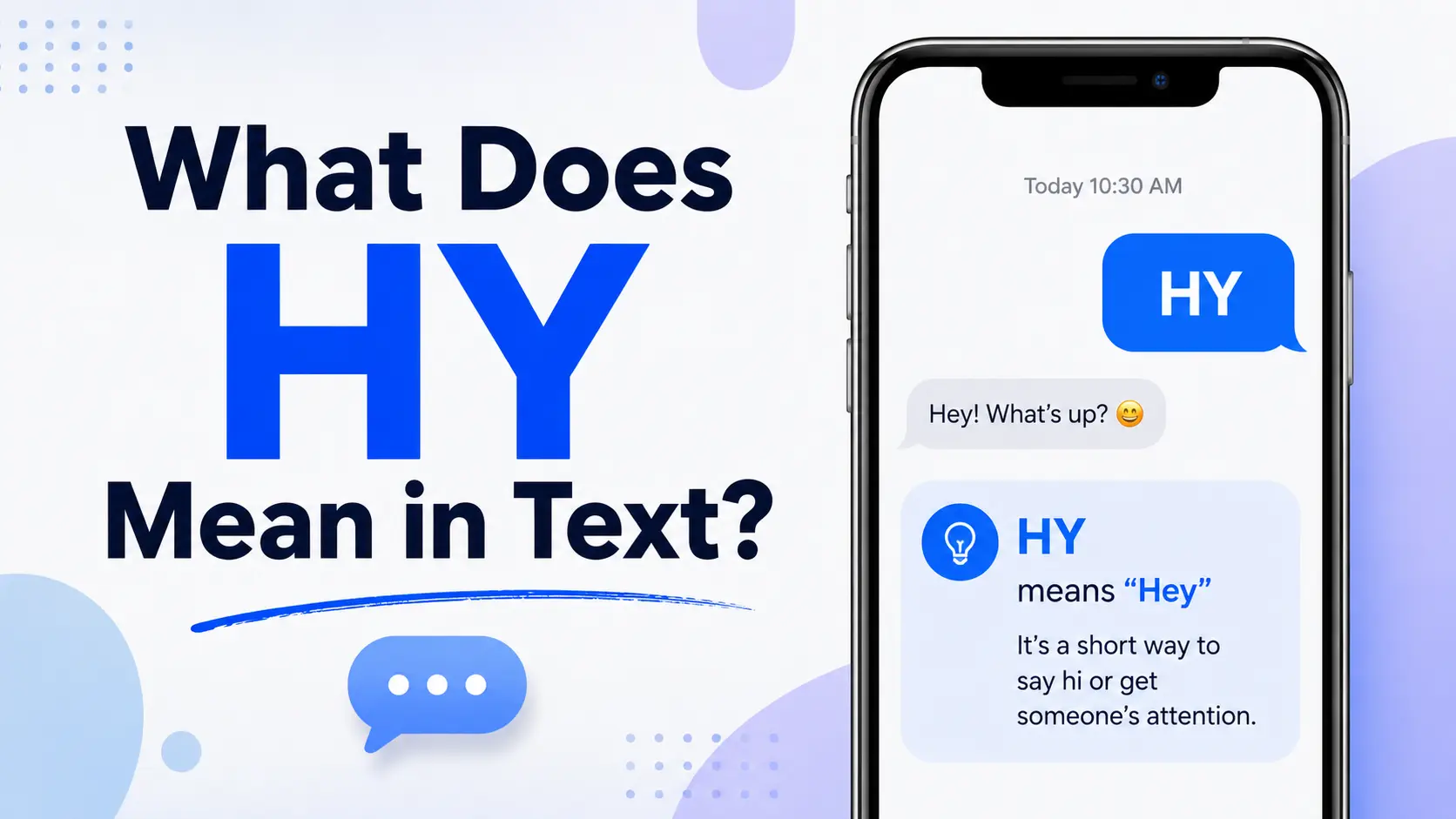
A third example could be a simple exchange like:
Person A: “HY”
Person B: “Hey! What’s up?”
Here, “HY” functions purely as a greeting, showing how minimal language can still effectively start communication.
HY vs Similar Abbreviations
“HY” is often compared to other similar abbreviations like “HI,” “HEY,” or even “HII.” While they all serve the same basic purpose of greeting, there are subtle differences in tone and usage. “HI” is slightly more neutral, “HEY” feels more casual and expressive, while “HY” sits somewhere in between as a quick and simplified version.
Compared to “HEY,” “HY” feels shorter and less emotionally expressive. It is more about efficiency than tone. Meanwhile, “HII” often adds friendliness or affection, especially in informal chats. These small variations show how digital language allows people to fine-tune their communication style.
Understanding these differences helps users choose the right expression depending on the situation. While “HY” is great for quick and casual use, other forms might be better when a more expressive or emotional tone is needed.
Communication Etiquette When Using HY
Using “HY” appropriately depends on understanding digital etiquette. In casual conversations, it is perfectly acceptable and widely used. However, in formal or professional communication, it is generally not recommended because it lacks the required level of professionalism and clarity.
Another important aspect of etiquette is timing and context. Sending “HY” without follow-up might feel incomplete in some situations, especially if the conversation requires depth or urgency. Adding a follow-up message helps maintain clarity and improves communication flow.
It is also important to consider the relationship between communicators. Among friends or peers, “HY” is completely normal. However, when communicating with teachers, colleagues, or formal contacts, more traditional greetings are usually preferred to maintain respect and clarity.
Impact of HY on Digital Communication and Conclusion
The use of “HY” reflects a larger shift in how people communicate in the digital age. Shortened forms, slang, and abbreviations have become essential tools for fast and efficient interaction. “HY” is a perfect example of how language adapts to modern communication needs while maintaining simplicity and friendliness.
It also highlights how emotional expression is evolving online. Even with minimal words, people can still convey tone, intention, and mood through context and usage. “HY” may be small, but it plays a meaningful role in shaping everyday conversations in digital spaces.
Overall, understanding “hy meaning in text” helps improve communication clarity and reduces confusion in online interactions. It is a simple yet powerful example of how modern language continues to evolve with technology and social behavior.
FAQs
What does HY mean in text?
It is a casual abbreviation for “Hi” or “Hey” used in informal digital communication.
Is HY formal or informal?
It is informal and mainly used in casual conversations with friends or peers.
Where is HY commonly used?
It is commonly used in chats, social media messages, and group conversations.
Does HY have different meanings?
In most cases, it only means “Hi” or “Hey,” but tone can vary depending on context.
Is HY appropriate for professional communication?
No, it is best suited for informal settings and not professional or formal communication.
Also read: Brasssmile com: A Complete Overview of What It Is, How It Works, and What Users Should Know
About the Author