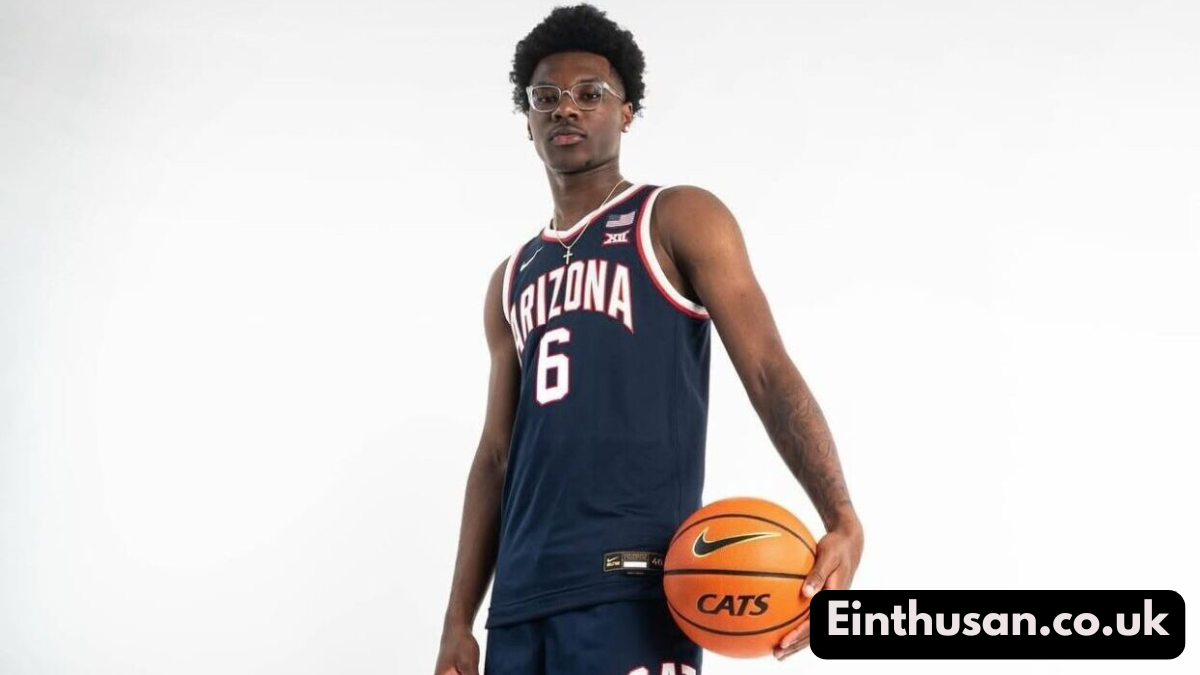
Introduction to Bryce James and His College Buzz
Bryce James has become one of those names in basketball conversations that naturally draws attention, even before he steps into a full college career. As the younger son of NBA superstar LeBron James, Bryce has grown up in an environment where basketball excellence is almost a daily language. Because of that, the moment people began discussing his transition toward college basketball, interest around the phrase “Bryce James college” started to rise significantly. It is not just about where he plays next; it is about how he develops within one of the most scrutinized basketball legacies in modern sports.
From a broader perspective, Bryce’s journey into college basketball represents the continuation of a story that started long before he was even a high school standout. Fans, analysts, and scouts have followed his development closely, not only because of his last name but because of his steadily improving skill set. Unlike many young athletes who are simply labeled as “prospects,” Bryce has gradually built his own identity on the court. That distinction matters when discussing his college future, because expectations are shaped both by heritage and by individual performance.
What makes the “Bryce James college” topic especially interesting is the balance between hype and reality. On one hand, there is immense public curiosity about whether he will follow a direct path into a top-tier NCAA program and eventually the NBA. On the other hand, there is the grounded reality of player development, where every athlete must earn minutes, adjust to new systems, and adapt to stronger competition. Bryce’s story sits right at that intersection, making his college phase one of the most closely watched in his generation.
Early Basketball Background and Development
Bryce James’s early basketball foundation was shaped by an environment where the sport was not just entertainment but a lifestyle. Growing up in the James household meant constant exposure to elite-level training habits, professional discussions, and a deep understanding of what it takes to succeed in basketball at the highest level. However, despite this unique background, Bryce’s development has followed its own natural rhythm rather than being forced into early stardom. His progression has been steady, with emphasis on fundamentals and long-term growth.
In his early years, Bryce was often compared to his older brother, Bronny James, which is almost inevitable in a family so deeply embedded in basketball culture. However, coaches and trainers who have worked with him often highlight that Bryce’s game developed differently. While early attention focused on his shooting ability and perimeter skills, his overall understanding of spacing, timing, and decision-making began to evolve more noticeably as he matured physically and mentally. These foundational traits are important when evaluating his future in college basketball.
As he moved through youth basketball circuits, Bryce began to stand out more on his own terms. Participation in competitive AAU environments exposed him to higher levels of athleticism and strategy. These experiences are often crucial for players who intend to compete at the collegiate level, and Bryce used them to refine his game. Rather than relying on name recognition, he gradually built credibility through consistent improvement, which is a key reason why his college prospects are taken seriously by analysts and recruiters alike.
High School Career and Rise to National Attention
Bryce James’s high school basketball career became a major focal point for scouts and media as he joined one of the most high-profile basketball programs in the United States. Playing at Sierra Canyon School placed him in a competitive environment filled with elite talent and national exposure. This setting allowed him to test his abilities against top-tier competition while also learning how to perform under constant media attention, something that most high school athletes never experience.
During his time at Sierra Canyon, Bryce showed flashes of strong perimeter shooting, improved ball handling, and an ability to contribute within structured offensive systems. While he was not always the primary scoring option, his role within the team highlighted his adaptability. Coaches often value players who can adjust their game based on team needs, and Bryce demonstrated that willingness by focusing on efficiency rather than forcing highlight-driven performances. This approach helped solidify his reputation as a smart, developing guard rather than just a celebrity prospect.
The national attention surrounding his games also played a major role in shaping his public identity. Every performance was analyzed, discussed, and compared to expectations tied to his last name. However, over time, observers began to notice that Bryce was carving out a distinct path. Instead of being defined solely by comparisons, he was gradually recognized for his own strengths and potential trajectory. This shift in perception is important when discussing his transition into college basketball, as it shows a maturing player stepping into his own spotlight.
Recruitment Journey and College Offers
The recruitment journey for Bryce James has been shaped by both his talent and his visibility. College programs have shown interest in him not only because of his skill set but also because of the broader impact he brings in terms of attention, media coverage, and fan engagement. In modern college basketball, where exposure and branding are increasingly important, players like Bryce represent a unique combination of athletic potential and cultural influence.
Throughout his recruitment process, Bryce has been evaluated by multiple programs that recognize his long-term upside. While he may not always be labeled as a top-tier national recruit in every ranking system, his development trajectory and basketball IQ have kept him on the radar of competitive Division I programs. Coaches tend to look beyond raw rankings when assessing players with his background, focusing instead on adaptability, work ethic, and growth potential.
What makes his recruitment particularly interesting is how carefully it has been managed. Rather than rushing into a decision, Bryce and his support system have taken a measured approach, ensuring that the college environment he chooses aligns with both his athletic and personal development goals. This is a critical factor for any young athlete, but especially for someone entering college with significant public attention already attached to his name.
Commitment to College Basketball Program (Reported USC Path)
Bryce James has been widely reported to have committed to the University of Southern California, a decision that fits both geographically and strategically within his development path. USC has become an increasingly attractive destination for high-level basketball prospects due to its competitive program, strong coaching structure, and visibility within a major athletic conference. For Bryce, this environment provides both opportunity and challenge, which is essential for growth at the collegiate level.
The decision to align with USC also reflects a broader trend in modern college basketball, where programs in major media markets offer athletes not only competitive play but also significant exposure. For a player like Bryce, who already operates under a national spotlight, the ability to develop within a structured yet highly visible program is a valuable advantage. It allows him to transition into college basketball without losing the attention that often follows elite recruits.
It is also important to note that commitments in modern college sports are part of a dynamic ecosystem influenced by NIL opportunities, roster changes, and long-term career planning. Bryce’s reported decision should be understood within this context, where flexibility and strategic development are just as important as immediate playing time. His college choice is less about instant impact and more about building a foundation for potential future professional opportunities.
Playing Style and On-Court Strengths

Bryce James’s playing style has evolved into that of a modern guard who emphasizes shooting efficiency, spatial awareness, and controlled decision-making. One of his most noticeable strengths is his ability to operate within structured offensive systems without forcing plays. This makes him a valuable asset in team-oriented basketball environments, particularly at the college level where discipline and execution are heavily emphasized.
His shooting ability, especially from mid-range and beyond the arc, has been one of the most discussed aspects of his game. While still developing consistency, Bryce has shown the mechanics and confidence needed to become a reliable perimeter threat. In modern basketball, where spacing and shooting are critical, this skill set translates well into college systems that prioritize ball movement and perimeter scoring.
Beyond shooting, Bryce has also worked on his ball-handling and defensive positioning. While he is still developing physically compared to more seasoned collegiate athletes, his understanding of positioning and timing allows him to stay competitive. Coaches often value players who can contribute in multiple ways even while refining their physical attributes, and Bryce fits that profile as a developing two-way guard.
Pressure of Being LeBron James’ Son in College Sports
One of the most defining aspects of Bryce James’s journey into college basketball is the constant comparison to his father, LeBron James. This creates a unique level of pressure that very few athletes ever experience. Every performance is analyzed not only on its own merit but also through the lens of family legacy. Managing that expectation requires a level of mental discipline that goes beyond physical training.
Despite this pressure, Bryce has shown a steady ability to remain composed and focused on his own development. Instead of trying to replicate his father’s game, he has worked on building his own identity as a player. This distinction is critical because it allows him to develop without being constrained by unrealistic expectations. College basketball will likely intensify this scrutiny, but it also provides an opportunity for him to further define himself independently.
At the same time, having a legendary basketball figure as a parent also provides advantages in terms of guidance, preparation, and understanding of professional pathways. Bryce has access to insights that many college athletes do not, particularly when it comes to navigating media attention, training demands, and long-term career planning. This combination of pressure and privilege creates a unique developmental environment.
Transition from High School to College Basketball
The transition from high school to college basketball is one of the most challenging steps for any athlete, and for Bryce James, it carries additional layers of expectation. The speed of the game increases significantly, defensive schemes become more complex, and physical demands intensify. Adjusting to this environment requires not just talent but also adaptability and resilience.
For Bryce, one of the key areas of adjustment will be consistency. In high school, players can often rely on natural talent and occasional dominance, but college basketball demands performance every game against highly skilled opponents. This means refining decision-making, improving conditioning, and learning to read more advanced defensive systems. These adjustments are often what separate long-term contributors from short-term prospects.
Another important aspect of this transition is role acceptance. Many highly recruited players enter college expecting immediate stardom, but successful programs often require patience and gradual development. Bryce’s ability to embrace his role, whether as a rotation player or developing contributor, will significantly influence his growth trajectory. This phase is less about spotlight moments and more about building a foundation for sustained improvement.
Media Attention and NIL Opportunities
In the modern era of college athletics, media attention and NIL (Name, Image, and Likeness) opportunities play a major role in shaping an athlete’s experience. Bryce James enters college basketball with a level of visibility that already exceeds many established collegiate players. This creates unique opportunities for brand partnerships, sponsorships, and media exposure that extend beyond the court.
However, managing these opportunities requires balance. While NIL deals can provide financial benefits and professional exposure, they must be carefully aligned with athletic development. For Bryce, the challenge will be ensuring that external attention does not overshadow on-court growth. Successful athletes in similar positions often rely on structured support systems to maintain focus while still benefiting from opportunities.
Media coverage will also continue to be a constant factor. Every performance, decision, and milestone will likely be analyzed extensively. This level of scrutiny can be demanding, but it also builds resilience. Learning how to navigate this environment is part of the modern college athlete experience, especially for players with high-profile backgrounds.
Expectations for College Career and NBA Pathway
Looking ahead, expectations for Bryce James college career are shaped by both potential and projection. While it is difficult to predict exact outcomes, his development path suggests a player who could grow into a reliable collegiate contributor with the possibility of professional opportunities if progression continues steadily. His focus will likely remain on incremental improvement rather than immediate stardom.
The NBA pathway, while always part of the broader conversation, will depend heavily on his college development. Scouts will evaluate his consistency, physical growth, and ability to perform against elite competition. College basketball serves as the proving ground where raw potential must translate into sustained performance. Bryce’s journey will be defined by how well he adapts to this environment over time.
Ultimately, his college career represents more than just athletic development. It is also about identity formation, independence, and long-term career shaping. Whether or not he follows a traditional path to the NBA, his time in college will be crucial in determining his trajectory within the sport. The combination of opportunity, pressure, and support makes his story one of the most closely watched in his class.
FAQs
What college is Bryce James going to?
Bryce James has been widely reported to have committed to USC, although official confirmations and evolving circumstances in college sports should always be checked for the latest updates.
What position does Bryce James play in basketball?
He primarily plays as a guard, focusing on perimeter scoring, ball handling, and team-oriented offensive play.
Is Bryce James as tall as LeBron James?
No, Bryce is not as tall as his father and plays a different style of game built more around guard skills than power forward or forward dominance.
Does Bryce James have NBA potential?
He has potential, but his NBA pathway will depend on continued development during his college career and how he performs against higher-level competition.
Why is Bryce James so popular in college basketball discussions?
His popularity comes from a combination of his basketball lineage, his own development as a player, and the media attention surrounding his transition into college basketball.
Also read: Naomi Osaka Husband: Relationship Status, Love Life, and Personal Journey Explained
About the Author