Introduction: Peter Orszag Bald and Why People Even Talk About It
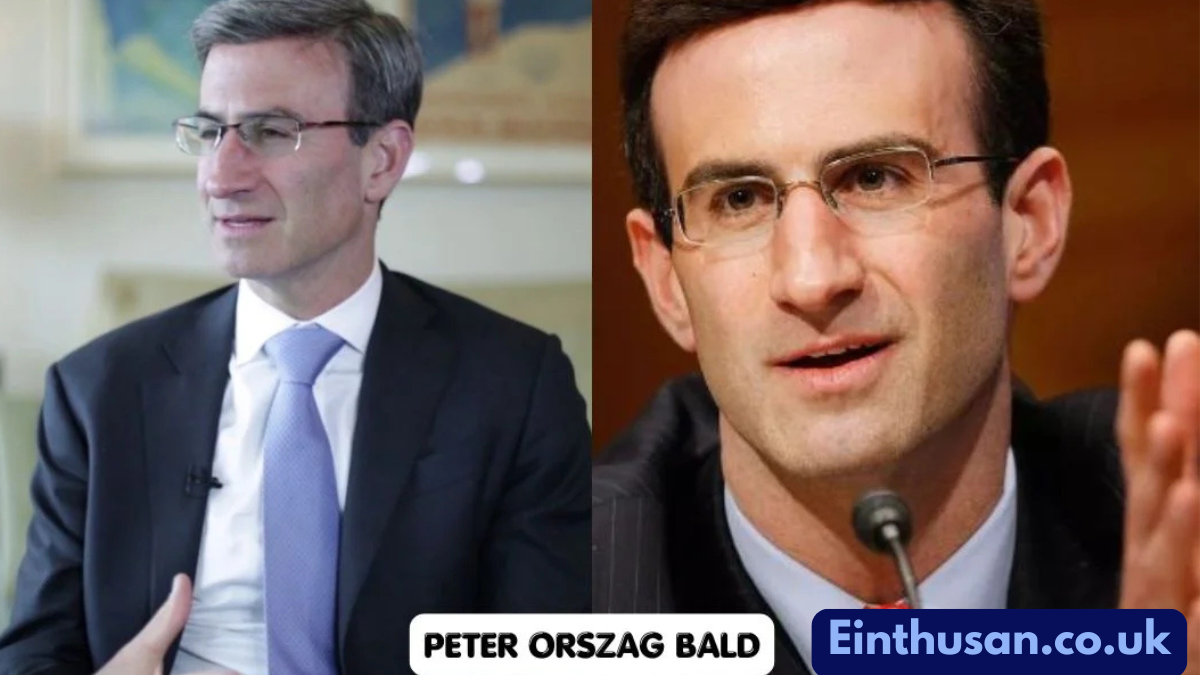
The phrase “Peter Orszag bald” has become one of those oddly specific internet search terms that reflects how modern audiences engage with public figures. It’s not really about hair alone; it’s about visibility, recognition, and the way appearance gets tied to identity once someone enters public life. In the case of Peter Orszag, a well-known economist and former government official, his bald appearance is simply one of the most visually consistent traits people notice and remember.
What makes this interesting is that Orszag’s reputation is not built on looks at all. His career is rooted in economics, policy design, and leadership roles in government and finance. Yet, like many public figures, a simple physical characteristic becomes part of the search culture surrounding his name. This happens especially in an era where people often Google quick identifiers rather than full biographies.
So when people type “Peter Orszag bald,” they are usually not trying to analyze hair specifically. They are often trying to confirm identity, recall who he is, or connect his appearance to the roles he has played in economics and public policy. It becomes a shorthand reference rather than a meaningful discussion about grooming or style.
Who is Peter Orszag and Why His Appearance Gets Noticed
Peter Orszag is widely recognized as an influential economist who has worked in high-level positions, including roles in the U.S. government and major financial institutions. He has been involved in shaping fiscal policy, advising on economic strategy, and contributing to discussions around healthcare and budgeting systems. His professional background is extensive, which makes him a frequent subject of policy-related discussions rather than personal commentary.
Despite this, public figures often get reduced to recognizable traits, and in Orszag’s case, his bald head is one of the most visually distinctive elements. This doesn’t diminish his work; instead, it reflects how human memory and media consumption function. People tend to latch onto one or two physical features when recalling someone, especially if that person appears frequently in interviews, panels, or televised discussions.
In professional environments like finance and politics, appearance often becomes part of subconscious branding. A clean-shaven or bald look can even be associated with seriousness or authority in certain cultural contexts. For Orszag, this visual simplicity may have unintentionally contributed to a consistent and memorable public image, even though it is not central to his achievements.
Public Curiosity Around Baldness and Recognition
The curiosity behind “Peter Orszag bald” also reflects a broader pattern in how audiences interact with public figures. People often search physical descriptors when they vaguely remember someone but cannot immediately place their name or role. In this sense, baldness becomes a cognitive anchor, helping people connect memory fragments to identity.
In Orszag’s case, his consistent appearance over the years makes this association even stronger. When someone appears in media across decades with little visible change, the mind tends to lock onto stable traits. Baldness, being a permanent and highly visible feature, becomes one of those anchors. It is not unusual for such traits to overshadow more complex professional identities in casual online searches.
There is also a cultural dimension. Baldness in public figures is often perceived neutrally or even positively, depending on context. Unlike other appearance-related traits that may be heavily scrutinized, baldness is widely normalized in professional environments. This makes it an easy reference point without negative implication, which is likely why it appears frequently in search behavior.
Baldness in Politics and Professional Life
Baldness is surprisingly common among high-level professionals, especially in politics and economics. The phenomenon is not specific to any one individual but reflects broader demographic and aging patterns. Many public leaders adopt a bald or closely shaved look, either due to natural hair loss or personal grooming preference.
In political communication, appearance is often tightly controlled, even when it seems effortless. A bald or clean-shaven head can project neutrality, maturity, and focus. It reduces visual distraction and can make a speaker appear more direct and authoritative. These subtle effects matter in environments where perception influences trust and credibility.
For someone like Peter Orszag, whose work revolves around data, economics, and institutional decision-making, appearance is secondary. However, the consistency of a bald look can inadvertently support a “serious professional” aesthetic. Whether intentional or not, it aligns with the image often associated with analysts and policymakers.
Media Attention and How Appearance Becomes a Talking Point

Media coverage of public figures tends to focus on clarity and recognition. When someone appears on television or in interviews frequently, even small visual traits become part of how audiences identify them. This is less about judgment and more about efficiency in recognition.
For Orszag, his presence in economic discussions and advisory roles has placed him in environments where viewers may not know his full background but still recognize his face. In such cases, physical traits like baldness become an easy identifier. Over time, this can lead to search patterns that combine name and appearance.
It is also worth noting that modern media cycles amplify this effect. Clips, thumbnails, and short-form content reduce context and increase reliance on visual memory. A bald head in a thumbnail becomes more memorable than the content of a detailed economic explanation, simply because visual recall is faster for audiences.
Psychological Interpretations of Baldness in Public Figures
From a psychological perspective, baldness is often associated with traits like maturity, confidence, and authority. These associations are not universal, but they are common enough in Western media representation to influence perception. When people see a bald public figure, they may subconsciously assign certain personality expectations.
In the case of Peter Orszag, this perception likely reinforces his already established professional identity. As someone involved in economic strategy and institutional planning, being perceived as authoritative can align with the nature of his work. However, it is important to emphasize that these associations are cultural interpretations rather than factual characteristics.
Psychology also explains why appearance-based searches exist in the first place. The human brain is wired to categorize quickly, often using physical traits as shortcuts. When someone cannot immediately recall a full identity, they often default to visible features, which explains why terms like “bald” get attached to names in search engines.
Internet Culture and the Simplification of Identity
Internet culture tends to simplify complex individuals into searchable fragments. Instead of searching full biographies, users often rely on keywords that reflect immediate recognition cues. This is where phrases like “Peter Orszag bald” emerge—not as analysis, but as retrieval behavior.
Once such terms become common, they gain momentum through autocomplete suggestions, search trends, and repeated usage. Over time, the phrase itself becomes part of the digital identity of the person being searched. This does not change the individual, but it changes how they are discovered online.
For public figures like Peter Orszag, this means that even neutral physical traits become part of their online footprint. It is a reminder that digital identity is not just about achievements but also about how people collectively label and remember those achievements.
Misconceptions and Overemphasis on Appearance
One common misconception is that repeated attention to appearance reflects importance or significance. In reality, it often reflects convenience. Baldness is not a defining characteristic of Orszag’s career, but it is an easily observable feature, which makes it more likely to be searched.
Another misconception is that appearance-based searches imply criticism or evaluation. In most cases, they do not. They are usually neutral attempts to recall or confirm identity. However, when repeated at scale, they can distort perception, making physical traits seem more central than they actually are.
In Orszag’s case, focusing on his baldness alone would ignore the broader context of his work in economics and policy. His contributions to fiscal strategy, healthcare reform discussions, and institutional advisory roles are far more significant than any physical descriptor attached to his name.
Why Appearance Still Matters in Leadership Perception
Even though expertise and results matter most in professional environments, appearance still plays a subtle role in how leaders are perceived. This is not unique to bald individuals; it applies broadly to all visible traits. People naturally form impressions within seconds of seeing someone.
For Peter Orszag, his consistent and simple appearance may actually support his professional brand by reducing distraction. In environments where clarity and analytical thinking are valued, a straightforward visual presence can reinforce perceived focus and discipline.
At the same time, it is important not to overinterpret this. Leadership effectiveness is not determined by appearance. Instead, appearance simply interacts with perception in small ways. Baldness in this context is neither an advantage nor a disadvantage—it is just part of a broader visual identity that audiences subconsciously register.
Conclusion: More Than a Search Term
The phrase “Peter Orszag bald” ultimately says more about internet behavior than it does about the individual. It reflects how people use visual shortcuts to navigate information-heavy environments. While the bald appearance of Peter Orszag is noticeable, it is only a tiny part of a much larger professional identity shaped by decades of economic and policy work.
What stands out more than the search term itself is the way digital culture compresses identity into keywords. In doing so, it highlights the gap between public perception and actual contribution. Orszag’s career is defined by analytical depth, not physical traits, but the internet often prioritizes what is easiest to see over what is most meaningful.
Ultimately, baldness in this context is just a surface detail—one that helps recognition but does not define significance. The real story lies in the work, not the appearance.
FAQs
Is Peter Orszag bald naturally or by choice?
His bald appearance is a natural result of grooming and/or hair loss, not a defining personal or professional choice.
Why do people search “Peter Orszag bald”?
Most searches come from recognition patterns where people recall his face but not his name or background.
Does Peter Orszag’s appearance affect his professional role?
No, his professional roles are based on expertise in economics and policy, not appearance.
Is baldness common among politicians and economists?
Yes, it is common due to age demographics and has no professional implications.
What is Peter Orszag known for besides his appearance?
He is known for his work in economic policy, government advisory roles, and financial leadership.
Also read: Newtoki: A Deep Dive into the Platform, Its Impact, and the Webtoon Ecosystem
About the Author